Food sovereignty: why are we eating pork from Brazil and lemons from another continent?
By Martín Guarini, grower at Araminda Lemons ·
Not long ago, I went to the supermarket and started checking where the fruits and vegetables were coming from. It's an exercise I recommend, though fair warning: it can be frustrating.
In a country like Uruguay, with its fertile soil and deep agricultural roots, I found garlic from China, oranges from Spain, and lemons from Egypt. And at the butcher counter, a good portion of the pork comes from Brazil, even though pork is raised right here in Uruguay.
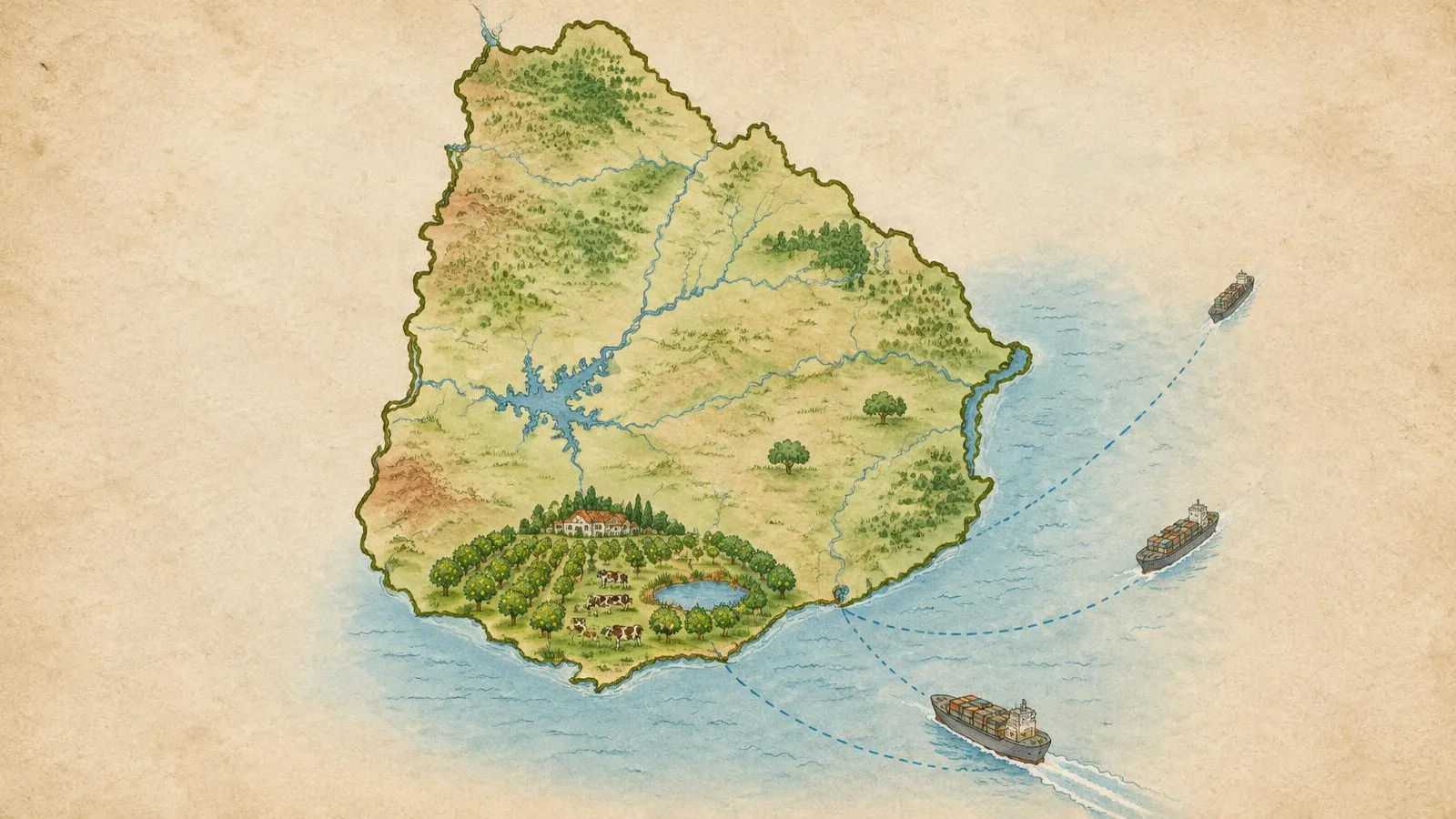
I couldn't stop thinking about how absurd it is for fruit to cross the ocean on a ship, burning fuel and heavily treated to survive the journey, only to end up on a shelf in Montevideo competing with produce that could have been harvested yesterday right here in Canelones.
The case of pork
Pork is the clearest example. In 2023, Uruguay imported 49,000 tons of pork, and 96% came from Brazil. Meanwhile, local processing has been declining for years, and many farmers have left the business.
In 2024, when floods in southern Brazil disrupted shipments, there was talk of shortages and price hikes in Uruguay. That showed just how fragile it is to depend on a single supplier—and on suppliers from abroad.
I'm not saying we should stop importing altogether. I'm saying that when a country stops producing something, it loses the power to make its own decisions about it.
What is food sovereignty?
For me, as a small grower in Canelones, it's simple: food sovereignty means being able to feed ourselves without relying on a ship arriving or on supply chains staying unbroken, as happened during the COVID-19 pandemic.
If we let the hunt for the lowest price wipe out local growers, we leave ourselves vulnerable. If a supply chain breaks down—due to a pandemic, a war, or a flood—who feeds you? Where are you going to get lemons, pork, or tomatoes?
The trap of cheap prices
That imported product is usually cheap for reasons that never appear on the label:
- Labor and scale costs that a small grower simply can't match.
- A long journey whose environmental cost nobody pays for.
- Local farmers who can't compete and end up leaving the countryside.
Today's lowest price can end up costing dearly tomorrow. I’d say very dearly.
The invisible cost of the journey
For fruit to last weeks inside a container, nature alone isn't enough. It requires cold storage, waxes, and chemical treatments so it doesn't spoil. Just think: that fruit could have been harvested months before it ever reaches your table.
When you buy local produce, the fruit doesn't need a passport. At Araminda, our lemons are picked once they're ordered and go straight from the orchard to your home, about 70 km from Montevideo and Punta del Este.
Taking back control from your kitchen
Every time you buy, you choose what kind of production continues to exist in your country.
At Araminda, we want to prove that it is possible to make a living growing wholesome food in Uruguay, through a model where the person who eats and the person who grows know one another. If you'd like to be part of it, take a look at how it works.
Frequently asked questions
Where does the pork consumed in Uruguay come from? Most of it is imported. In 2023, Uruguay imported 49,000 tons of pork, and 96% came from Brazil.
What is food sovereignty? It is a country's ability to decide on and sustain its own food production, without relying entirely on what comes from abroad.