Cheap comes at a high price: the cost that isn't on the label
By Martín Guarini, grower at Araminda Lemons ·
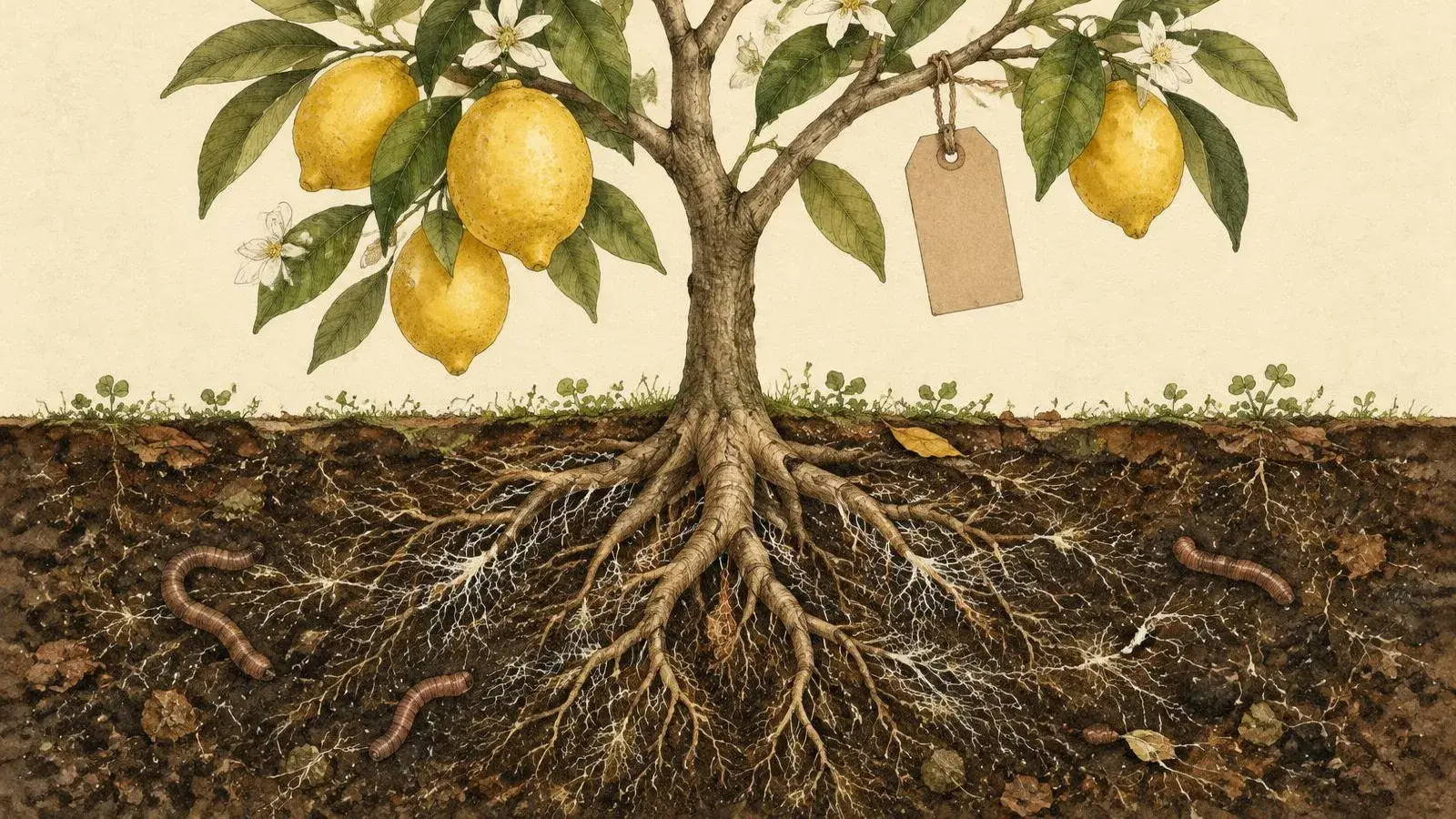
We all know that eating fruit grown without agrochemicals is better. But when we get to the register, doubt creeps in: "Pay that much for a few lemons? No way."
And we end up grabbing the cheapest option, feeling clever. The problem is that there are costs that don't show up on the receipt.
Price is not the same as cost
Over the years, I've learned that there is a huge gap between what you pay and what something truly costs.
The cheapest food often doesn't factor into its price:
- The soil that degrades and the water that gets polluted.
- The low wages of those who produce it.
- The health impact of a diet based on ultra-processed products.
It’s not just me saying it. In 2023, the FAO estimated that the way we produce, transport, and eat food generates hidden costs of at least 10 trillion dollars a year—nearly 10% of global GDP. Over 70% of those costs are linked to unhealthy diets. Another significant portion is environmental.
In the end, we all pay those costs, even if they don't appear on the label.
Why our lemons cost what they cost
Yes, buying your harvest at Araminda costs more than picking up lemons at the supermarket. Here is why:
- Human labor. Without herbicides, there is much more hands-on work: caring for the trees, managing the grass, harvesting, and sustaining regenerative practices that integrate different types of production on the same land.
- Risk. Without chemicals, if a bad year of pests or weather hits, we take the hit. And we don't offset it by spraying something.
- A fair price for the grower. You buy directly from the producer, without middlemen taking the lion's share. And, above all, you know where your lemons come from and you are part of that process.
- The soil. We care for a living soil so that it keeps producing 30 years from now.
Cheap is often achieved by squeezing someone or something. Quality is achieved through care, and we care with the intention of leaving something better for future generations.
A different kind of math
We pay for the best motor oil for our car without hesitating, yet we haggle over what we eat every day. It's a calculation worth rethinking.
I'm not going to tell you that a lemon cures anything. I'm telling you something simpler: you know where it comes from, who grows it, and how. It comes straight from the tree with no wax, no post-harvest treatments, from an MGAP-certified organic farm.
Nobody gets rich doing organic farming. We do it because we believe it's the right way to grow food. If you feel the same way, take a look at how it works.
Frequently Asked Questions
What are the hidden costs of food? They are costs that don't appear in the price tag, such as environmental damage or the health impacts of unhealthy diets. The FAO estimated them at at least 10 trillion dollars a year in its 2023 report.
Why does an organic lemon cost more? Because it requires more hands-on work, the grower takes on more risk by not using chemicals, and, in Araminda's case, you pay the grower directly a fair price, with no middlemen.