In praise of ugly fruit: why your lemon shouldn’t shine
By Martín Guarini, grower at Araminda Lemons ·
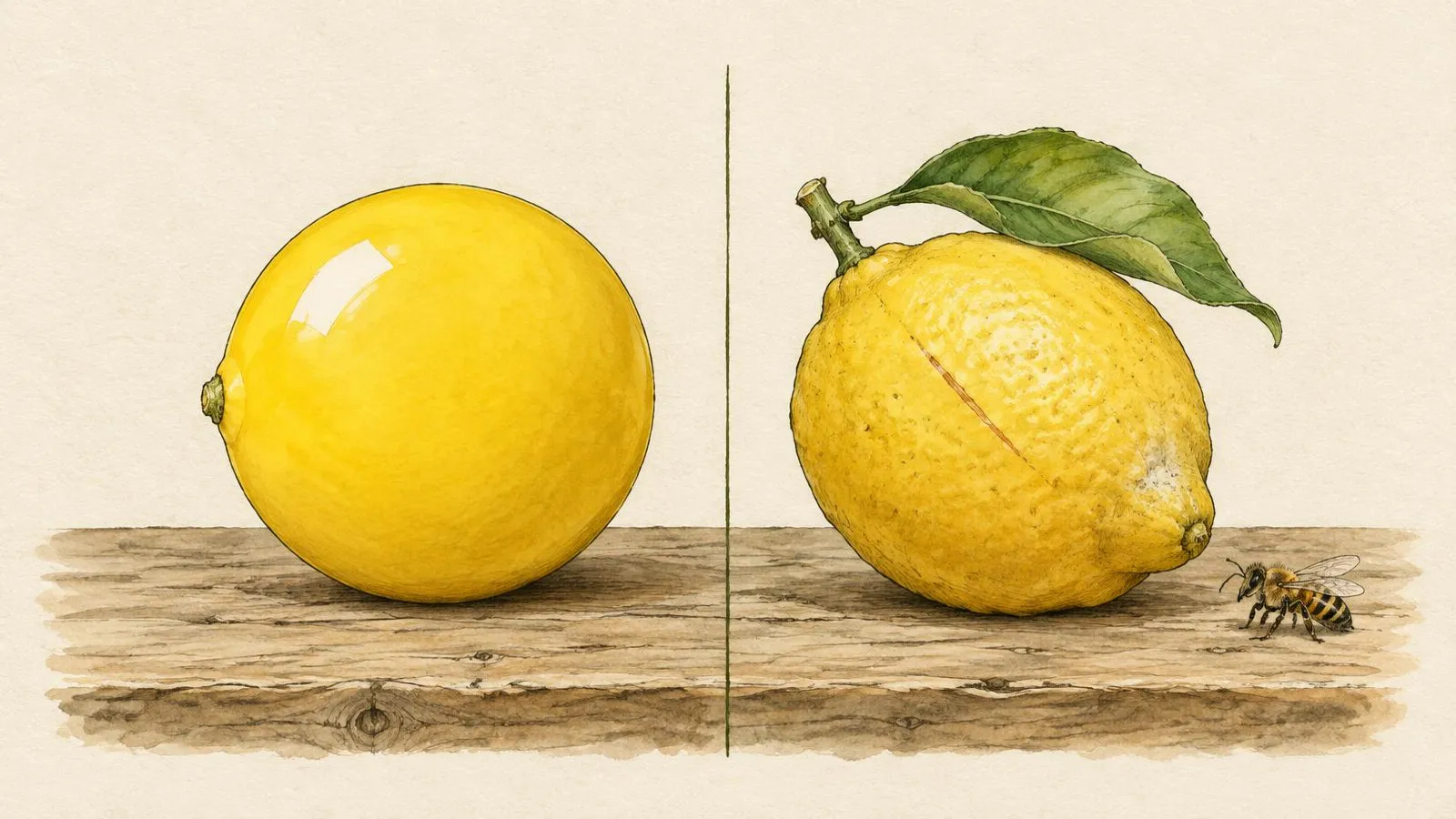
"We eat with our eyes." It’s a phrase I hear all the time, and it’s the golden rule of the fruit market.
At the grocery store, you see pyramids of perfect lemons: evenly yellow, smooth, with a commercial-ready shine. Your hand instinctively reaches for them.
At Araminda, when we see a lemon that’s overly shiny, we know it went through a long post-harvest process. On the tree, lemons simply don’t shine like that.
The price of perfect beauty
When we gave up chemicals, we hit a harsh reality: at the market, our lemons were worth less. Why? Because they had "visual flaws": the scrape of a branch swaying in the wind, a tiny spot left by an insect, a shape that wasn’t perfectly round. And worst of all, they were worth less because our lemons don’t last as long, since they don't have any post-harvest chemicals extending their shelf life.
To achieve the picture-perfect fruit you see on supermarket shelves, the conventional supply chain usually does two things we never do:
- Post-harvest treatments. Wax and more chemicals. That shine isn't natural: it's a layer of wax applied to make the fruit glossy and prevent moisture loss, and it’s usually paired with fungicides so it can withstand weeks in cold storage and transit.
- Treatments so nothing ever touches it. To keep any insect from marking the skin, chemical spray schedules are applied year-round. The result is an immaculate peel.
Ugly fruit is real fruit
At Araminda, our lemons don’t wear makeup. If you see a scar on the peel, it’s telling you a story: wind rub, which is the mark left when a branch brushes against it; a cold-weather spot; the visit of an insect. Life happened here, and the tree thrived without any chemical help.
Our lemons come straight off the tree, without wax or post-harvest treatments. They come in all sizes and unique shapes—lemons you won’t find at the grocery store, because they’d be discarded beforehand. It’s true they don’t last as long in the fruit bowl, because the peel can actually breathe. But you gain so much more:
- Aroma. Zest one of our lemons, and the scent fills the entire kitchen.
- Edible peel. You can grate it into a cake or a cocktail knowing you aren’t zesting wax or synthetic chemicals—you’re just zesting pure lemon.
A quick practical tip: keep them in the fridge and they’ll last quite a bit longer.
Quick guide: what are you buying?
| Conventional supermarket lemon | Araminda lemon | |
|---|---|---|
| Appearance | Shiny, smooth, uniform | Matte, naturally marked, varied |
| After harvest | Usually treated with wax and preservatives | Nothing: straight from the tree |
| Shelf life at home | Longer | Shorter: best kept in the fridge |
| Peel aroma | Muted: usually coated in wax | Intense: full, natural fragrance |
Rediscovering our palate
We’ve trained our eyes to look for shine, and we’ve forgotten what our taste buds are actually searching for. Over the years, I’ve learned that nature doesn't mass-produce like a screw factory. Every single piece of fruit is unique.
Here’s a little challenge. Next time you hold an "ugly" lemon, don’t set it aside. Cut it open. Smell it. Taste it, and you’ll see that on the inside, it’s just as good.
If you’d like to receive lemons like this at home, at Araminda Lemons you can buy your harvest for the year: 40 kg of certified organic lemons, delivered straight from the farm. See how it works.
Frequently asked questions
Why do supermarket lemons shine? Because after harvesting, they are coated with a layer of wax to make them glossy and reduce moisture loss, along with fungicides to preserve them during transport and in cold storage.
Do organic lemons have a shorter shelf life? Yes, generally they don’t last as long in the fruit bowl because their peel isn’t sealed with wax. Kept in the refrigerator, they last considerably longer.
Can you use the peel of an organic lemon? Yes. Araminda lemons have no wax and no post-harvest treatments, so you can safely zest the peel for cakes, cocktails, or everyday cooking.