The Spreadsheet Lied: The Truth About My Transition to Organic Farming
By Martín Guarini, grower at Araminda Lemons ·
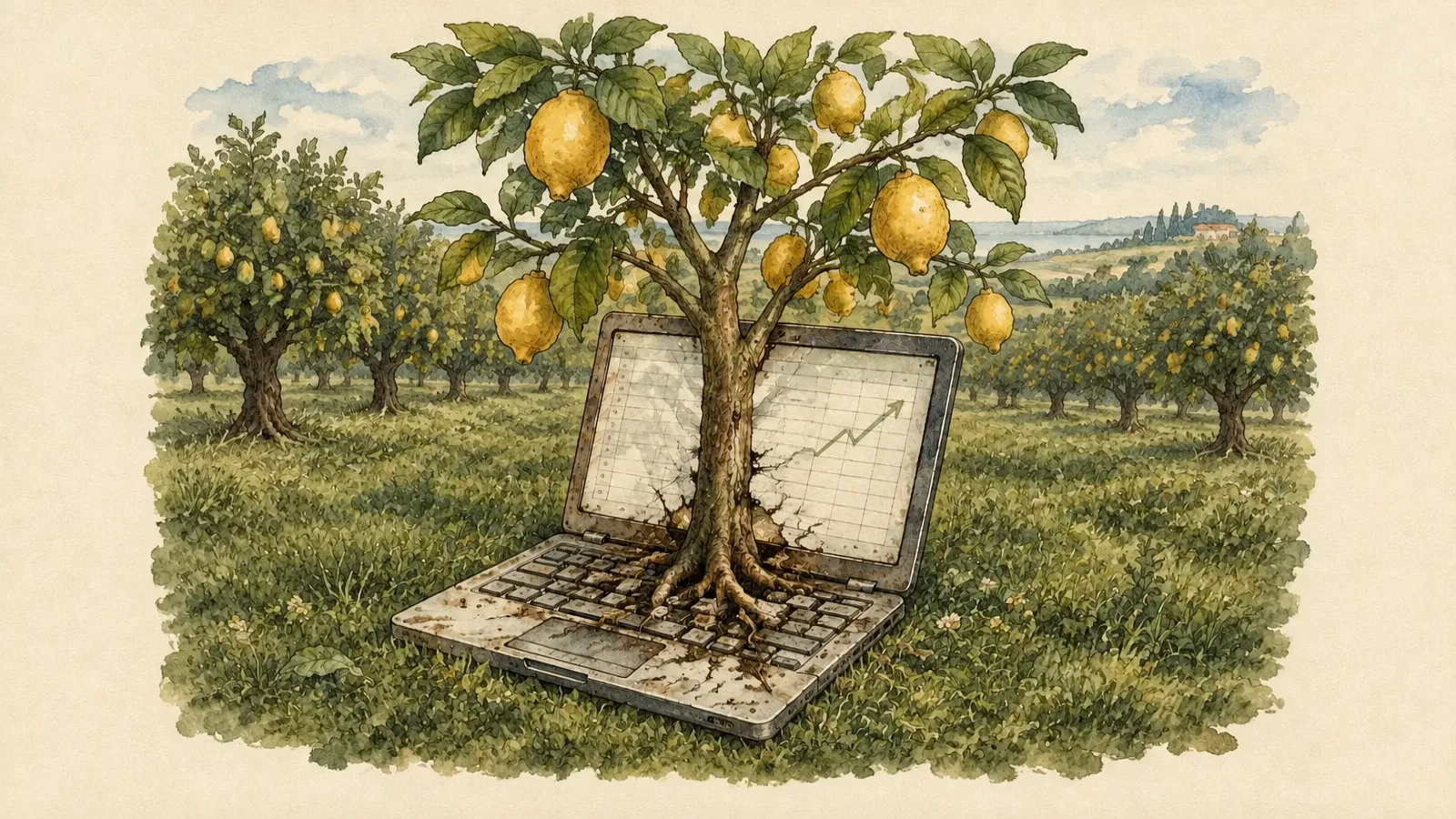
October 12, 2017, is a date etched in my memory. That was the day we took ownership of this farm in Araminda, Canelones: 23 hectares of lemon groves planted in 1993, less than a kilometer from the sea.
I still remember the feeling: adrenaline, pride, and, to be completely honest, quite a bit of naivety. I came in with my savings, all the energy in the world, and something far more dangerous: a spreadsheet tucked under my arm.
If you looked at that spreadsheet, the business looked brilliant. The numbers worked out from every angle. If we applied the standard "technology package"—which is just the fancy industry term for herbicides, insecticides, fungicides, and synthetic fertilizers—production would soar and profitability was guaranteed.
The spreadsheet said we were going to thrive. The land had other plans.
The Day Everything Changed
For the first few years, I farmed conventionally, just like everyone else. On paper it worked, but not quite like the spreadsheet had promised: the business wasn't nearly as glamorous as it seemed.
A few years after buying the farm, we found out our family was about to grow: my twins were on the way. I stood in the middle of the rows of lemon trees and thought: "How can I let my kids run around and play here if I'm spraying poisons and chemicals that could make them sick?"
I stopped using all chemicals. Cold turkey, overnight. And that’s when the spreadsheet shattered into a thousand pieces.
What Nobody Tells You About Going Organic
A lot of fellow growers told me: "It’s not going to work. Focus on churning out kilos, not on saving the planet." And financially speaking, they were right. Here is what actually happened:
- The first two years went fine. The land still had reserves left in it.
- In the third year, the farm crashed. Yields collapsed to 20%, the trees turned yellow, and pests ran wild. It was the closest thing to a full-body detox I’ve ever seen.
- The market didn’t wait for me. I thought that because the fruit was chemical-free, people would snatch it up instantly. That wasn’t the case. My lemons had no wax, they had little blemishes, they were uneven. By supermarket shelf standards, they were "ugly."
- My savings vanished. Holding onto a conviction the market isn't willing to pay for costs serious money.
"You like dying with your boots on"
An agronomist working with me back then took one look at the numbers in the red, saw the drought tightening its grip, looked at me, and said: "Martín, you just like dying with your boots on."
It's an old saying: sticking to what you believe in right to the bitter end. And it's true—I am stubborn.
I could have gone back to chemicals. But bit by bit, some trees recovered while others died off, natural predators kept pests in check, and the soil came back to life. Every time I spot a frog returning to the grove or catch the scent of damp earth after the rain, I know that spreadsheet was wrong. The real value wasn't in the "net profit" cell. It was in living, regenerated soil.
Today, after 7 years free of synthetic chemicals, we are the only citrus farm in Uruguay with organic certification granted by the MGAP.
Is Organic Farming Profitable in Uruguay?
It’s a question I get asked often. My answer, coming from an actual grower and not a theorist, is this:
- In the short term, it’s a tough financial challenge. It takes far more manual labor, the transition knocks your yields down, and the mass market penalizes fruit that doesn’t look flawless on the outside, because that’s what supermarkets and advertising have conditioned us to expect.
- In the long term, it’s the only way the land will keep producing. A system that squeezes every last drop out of the soil has an expiration date. A system that regenerates and breathes life into the land is what will still be here for generations to come.
We don’t aim to push every tree to exhaustion. We are happy with what each tree naturally wants to give us.
Why I’m Sharing This
I’m not writing this to complain. I’m writing it so you know what truly goes into growing an organic lemon.
The problem was never growing them; it was selling them. That’s why at Araminda we stopped fighting the market of cosmetically perfect fruit and built something different: co-production. You buy your year’s harvest upfront, directly from the grower, and become part of the farm. I explain how it works in detail on our How it works page.
I won’t promise you the shiniest lemon on the supermarket shelf. I promise you one just as it comes off the tree.
Frequently Asked Questions
How long does the transition from conventional to organic farming take? It depends on the land. At Araminda, the grove held up during the first two chemical-free years; in the third, production dropped to 20%, and after that, it slowly recovered. Today, we have been free of synthetic chemicals for 7 years and hold organic certification from the MGAP.
What is co-production? It’s a model where you purchase your annual harvest upfront, directly from the grower. At Araminda, that means 40 kg of certified organic lemons for $365 USD a year. Along with your harvest, you get a lemon tree tagged with your name, four farm experience days, and your say in which new projects we develop.