The vaccine against ghost towns: how to stop the countryside from emptying out
By Martín Guarini, grower at Araminda Lemons
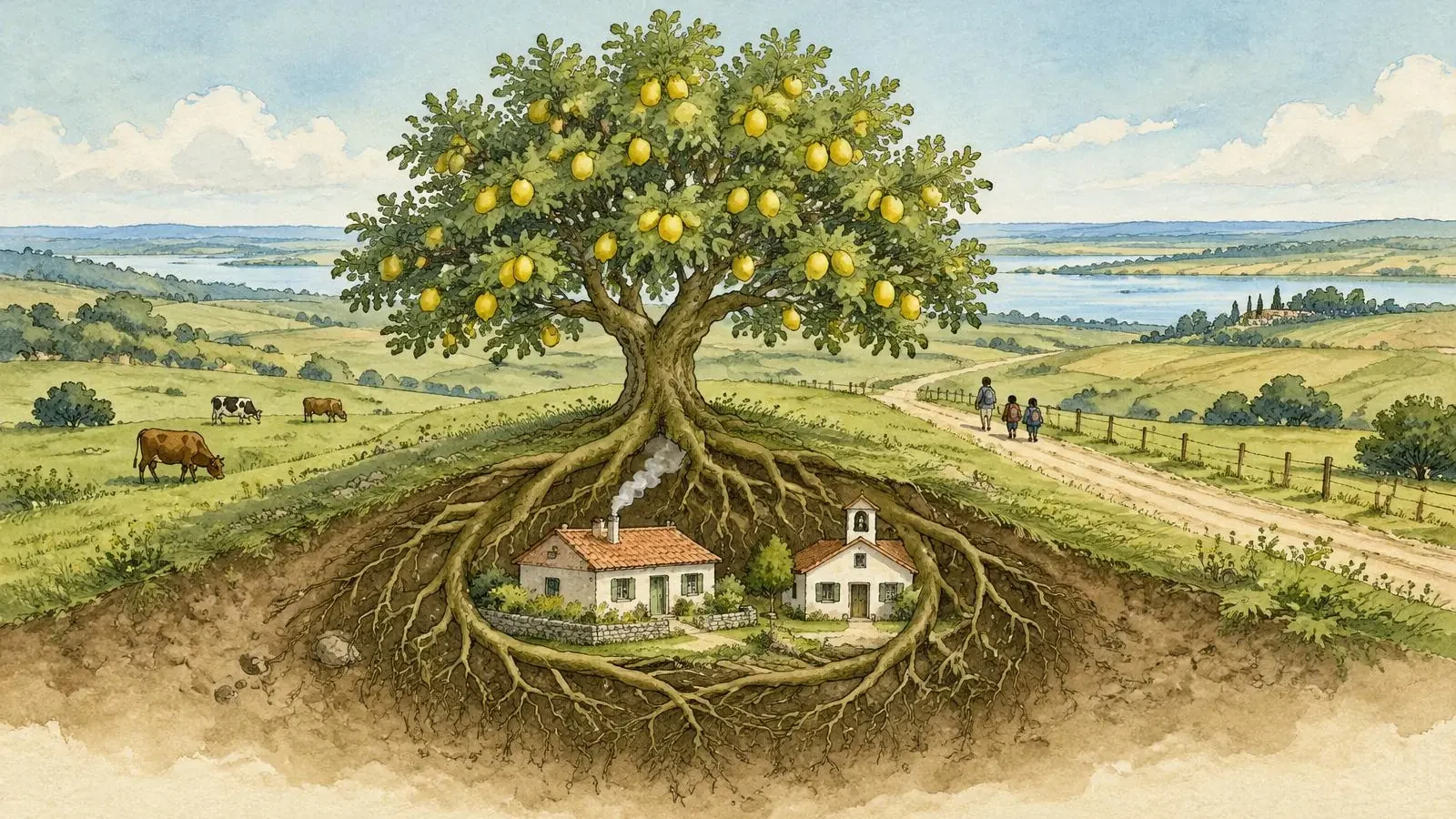
If you travel through Uruguay's interior, or even the rural areas of Canelones, you will see a painful sight: abandoned homesteads. Empty farmhouses, rural schools with fewer and fewer children, and young people leaving for the city because "there is no future in the countryside".
The countryside is emptying out. Not because there is a shortage of land, but because many small farmers cannot make ends meet. When a farmer has to sell for less than it costs to produce, their children see it and say: "I'm not staying here".
When the love of farming is lost because of economic hardship that our children do not want to go through, it is sad to see and to feel. I say this from personal experience. I always say that if new generations do not want to farm because they do not like it, that is a different matter: they are free to choose. But not wanting to farm because they see and suffer through what their parents experience—the financial pressures, the poor pay for what they harvest, or even having to throw the harvest away—that is something else.
What a fair price provides
I think about this a lot. As a farmer, what I need most is not a subsidy: it is knowing that what I produce has a buyer, and at a price that allows me to keep going.
Co-production provides that. When we know in advance how much of the harvest is sold, we can plan the year, care for the farm, and harvest only what is needed, without extra harvesting and transport costs. And with a fair price, the farm can create jobs and sustain itself over time.
We are a small farm and we are just getting started. I am not going to tell you that Araminda Lemons has already changed the reality of Uruguay's countryside. I am telling you that this is the path we want to follow, and that we want you to be part of it.
What happened elsewhere
In Oliete, a village in Teruel, Spain, with around 350 inhabitants, the Apadrinaunolivo.org project restored more than 16,000 abandoned olive trees over ten years and created jobs for 35 people. People from across the country took an interest in a village that was emptying out.
It is not magic: it is a fair price, a direct connection, and city people turning their attention back to the countryside.
What someone in the city can do
You do not have to move to the countryside to help keep it from emptying out. A few simple choices are enough:
- Buy domestically grown produce: lemons, apples, grapes, oranges—food produced and harvested in Uruguay.
- Buy directly from a farmer when you can, even if it is only some of what you eat.
- Get to know the farm your food comes from. Visit, ask questions, come back.
- Spread the word. Many small farmers depend on word of mouth.
Each of those choices gives a farmer one more reason to stay.
From consumers to neighbors
Your purchasing decision does more than fill your fruit bowl. It helps keep a farm in production, create jobs nearby, and allow families to stay on their land.
And when you come to our farm days, the countryside fills with people again.
Let us not let the countryside fade away. See how it works.
Frequently asked questions
How does co-production help small farmers? It gives the farmer a fair price and a guaranteed sale before harvesting. With that, they can plan the year, care for the farm, and sustain themselves over time.
Are there examples showing that it works? Yes. In Oliete, Spain, the Apadrinaunolivo.org project restored more than 16,000 abandoned olive trees over ten years and created jobs for 35 people.