I stopped looking for customers: what it means to be a co-producer
By Martín Guarini, grower at Araminda Lemons
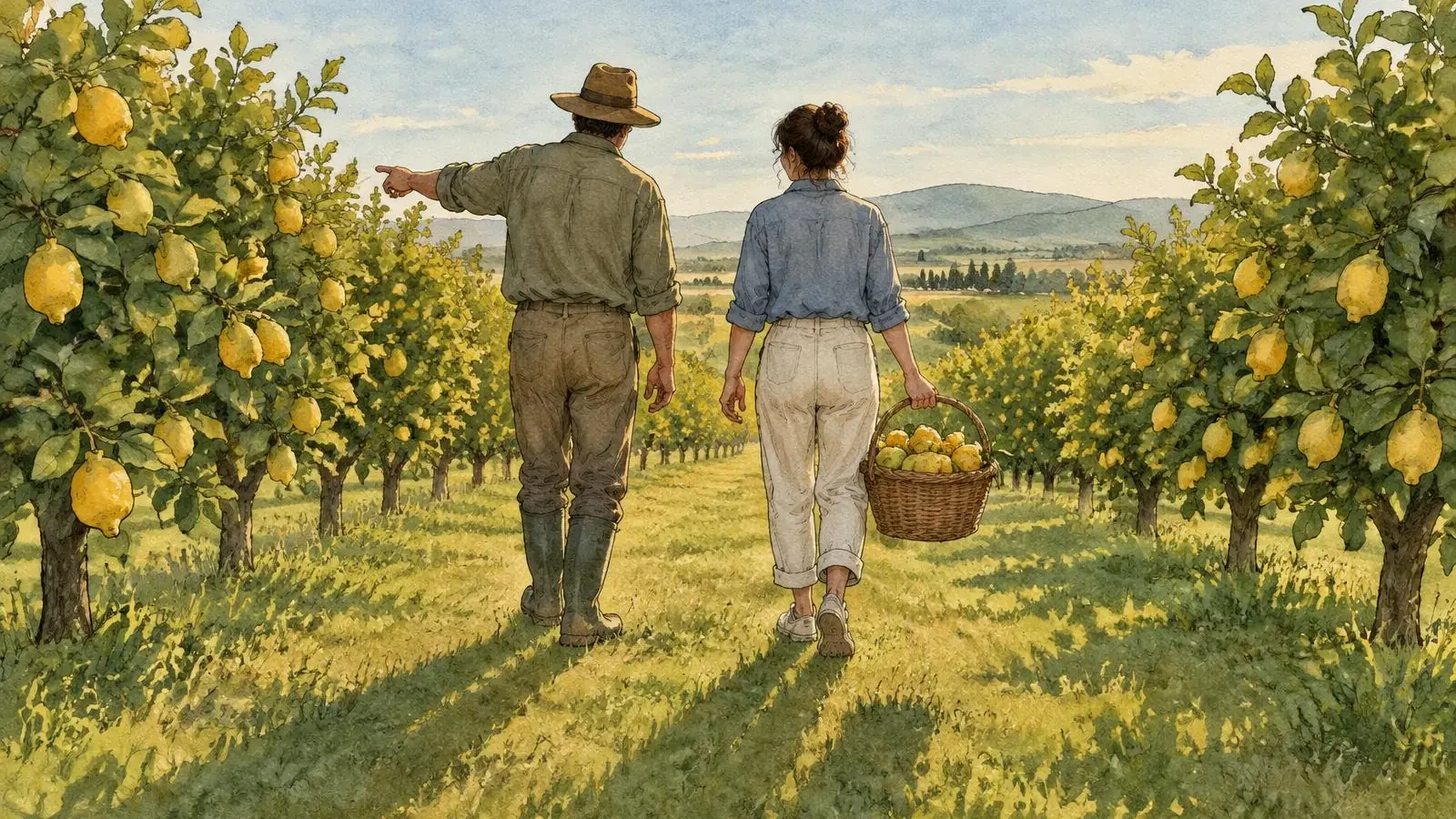
There's a word that has always bothered me: "consumer".
To consume is to use up, exhaust, make disappear. The consumer is the end of the chain: someone who takes what someone else made and asks no further questions.
For a long time, agriculture treated people that way. The arrangement was cold: I produce in silence, you buy without asking. Everything became impersonal.
That model left the producer alone with the risk (weather, pests, prices) and the person eating with no idea what they were eating or how it was produced.
At Araminda, we decided that arrangement doesn't work for us. And we believe it doesn't work for you either.
What a co-producer is
A co-producer is someone who buys their year's harvest in advance and, by doing so, becomes part of the farm.
Specifically, at Araminda:
- You buy your harvest: 40 kg of fresh certified organic lemons per year, for USD 365. One single price.
- You receive your lemons in up to 8 deliveries between May and December, with shipping included within our delivery area, or you pick them up at the farm.
- You have an assigned lemon tree, with a plaque bearing your name.
- You come to the farm for four farm days a year, with your immediate family.
- You share your opinion on new farm projects. For example: a kitchen for making juice and zest, or free-range chickens.
It's not a donation
Someone once told me this sounded like adopting a tree, as if it were charity. It isn't. We don't ask you for a donation: we sell you your harvest, and with it you take part in the farm's decisions and become part of the project.
Eating is an agricultural act, wrote the American essayist and farmer Wendell Berry. When you choose what to eat, you're deciding what kind of agriculture continues to exist.
What changes when you're a co-producer
- We share the risk. At the supermarket, if there's a drought and prices go up, all you do is complain. As a co-producer, you know that if it's a tough year, the lemons may be smaller and may not look perfect.
- We share a standard. On supermarket shelves, fruit is expected to shine. A co-producer knows that a mark on the peel isn't a defect: it's a sign that the tree grew without chemicals, that a storm battered it or a branch left a mark.
- You know what your money is used for. Buying the harvest at the beginning of the season allows the farm to plan the year, care for the trees, and harvest only what has been sold.
In other countries, this is called community-supported agriculture. In Uruguay, it didn't exist yet, and we want to be the first.
Welcome to the team
We want you to be able to say proudly: "My lemons come from a farm I know, and I'm part of the community that supports this project". Because it will be true.
Stop consuming and start co-producing. See how it works.
Frequently asked questions
Is being a co-producer the same as adopting a tree? No. It's neither a donation nor a symbolic adoption: you buy your year's harvest, and with it you take part in the farm's decisions.
Do I own the assigned lemon tree? No. You have an assigned lemon tree with a plaque bearing your name, but that doesn't give you ownership of the tree or the land. Your 40 kg come from the production of the entire farm.
Is there a limit on the number of co-producers? Yes, one thousand families. Once all the spots are filled, new families go on a waiting list.